

AI that Matters: Focusing on ROI, quality, and human judgment.
By Andrea Nemeth
DISCUSSIONS ABOUT ARTIFICIAL Intelligence tend to feel like a choice between two extremes – absolute excitement for a world-changing tool or deep anxiety regarding job security and the erosion of human connection. At his upcoming session at the 2026 MHEDA convention, AI expert Dan Chuparkoff – a pioneering technology leader with over 30 years of experience at Google, McKinsey, Atlassian, and more and a specialist in workflow management – aims to move business leaders away from these extreme viewpoints and toward a “pragmatic reality.”
The Polarization of AI Sentiment
The current divide on the subject of AI is largely driven by the modern media landscape, an often unreliable source. Chuparkoff notes that media channels and social media platforms function as “click optimizer machines,” exploiting extreme perspectives to drive ad sales, clicks, and popularity. Consequently, most people receive their information from either a place of fear – worrying that AI will make their job redundant – or a place of hyper-excitement.
The reality will likely be a meeting in the middle. While fears about AI replacing human roles are valid in some contexts, the challenge for leaders is to find the actual Return on Investment (ROI) and deploy the technology in ways that make sense for their specific business needs.
Debunking the Efficiency Myth
One of the most significant misconceptions about AI is that it is primarily a tool for speed and staff reduction. Some leaders hear the word “efficiency” and mistakenly believe that deploying AI licenses will allow them to reduce their staff in direct proportion to those fees.
Chuparkoff argues that if you use AI as a partner to improve quality, you quickly realize it is often not faster. He provides a concrete example involving sales outreach: A good salesperson can manually kick out an email to a lead in 15 seconds. Using AI to do the same task involves writing a long prompt to describe the situation, reviewing a draft, telling the AI what is incorrect, editing it, and then refining the final version, a process that might take 15 minutes instead of 15 seconds.
However, the efficiency is found in the results: that a 15-minute email may convert at 100 times the rate of a 15-second one. For leaders, the focus should shift from “When will AI make us faster?” to “How can AI make our output better?” Says Chuparkoff, “If you find yourself asking, when is AI going to make us more efficient, you might be asking the wrong questions and deploying AI in the wrong ways.”
The Six Layers of Work: Where Humans Remain Essential
Drawing from nearly two decades of studying how teams manage work, Chuparkoff identifies six distinct types of activities workers perform at the office. He organizes these into a pyramid, suggesting that while AI will dominate the bottom layers, which currently occupy the most time for workers, the top layers remain the exclusive domain of people.
“The first three layers are communication, process, investigation…and AI will be really good at helping with those things. It’s going to make our ability to execute workflows better,” says Chuparkoff. “It’s going to make our ability to find issues and problems quicker.”
But, he adds, “There are three other layers: problem solving, decision making and imagining. And solving and deciding and imagining are the three things that AI won’t ever do as well as you. So, over time, as AI does those other things, your job will become solving and deciding and imagining.”
Chuparkoff’s goal for organizations is to flip this pyramid upside down. By allowing AI to handle the heavy lifting of communication and process, professionals can expand the time they spend on solving, deciding, and imagining.
Starting Small: The “Fridge” Strategy
For leaders who feel overwhelmed by the thought of implementing AI, the best first step is to develop familiarity through exploration. Chuparkoff suggests a “one new thing” rule. He asks AI to provide him with a suggestion for a new AI-related task to try every Monday.
One of his early, non-corporate examples involved taking a photo of the inside of a refrigerator and asking AI what to make for dinner. The AI identified the ingredients – like leftover rice, tomatoes, and a pepper – and suggested a recipe. This exercise taught Chuparkoff a vital lesson: AI is a suggestion maker, not a decision maker. Even with a suggested menu, a human must still decide what they actually feel like eating. Leaders can apply this same logic to their business – using AI for suggestions while maintaining the final judgment.
Building Competitive Advantage and Trust
Tangible advantages from using AI are already appearing in three key areas:
- Sales Funnels: Teams using AI for sales outreach are seeing higher lead conversion and customer satisfaction rates. They are leapfrogging competitors by focusing on quality over volume.
- Project Management: AI allows project managers to move beyond simple “red, yellow, green” spreadsheets. It can generate robust reports that explain why a project is behind and what has been done to mitigate risks, leading to much clearer communication.
- Procurement: AI can identify red flags in a procurement process in 20 seconds, rather than waiting for a manual review that might take days to schedule.
However, AI adoption must be handled carefully to maintain trust. A major risk is in the area of communications: If team members or sales reps simply click “send” on AI-suggested replies without reading or editing them, they risk using the wrong tone or referring to things already discussed, making the recipient feel they aren’t talking to a person, but to a bot. Current AI requires high levels of governance and oversight to ensure mistakes are corrected before they reach a customer.
Preparing for the “AI Bill”
Chuparkoff warns that the current era of free AI products is temporary, fueled by venture capitalists seeking adoption. Eventually, every AI interaction – whether generating an image for a PowerPoint or summarizing a transcript – will have a visible cost.
Leaders need to start asking, “What is the value of this task?” While it might be worth the cost to communicate more effectively with a high‑value customer, it may not be worth paying for an AI‑generated image for an internal slide deck. Understanding the ROI now will prevent businesses from being caught off guard when the “AI bubble” bursts and companies that cannot justify their costs drop off the market.
The Infinite Work World
The closing message for the industry is one of empowerment rather than replacement. “AI will not take your job, but it will take some of your work,” says Chuparkoff. “As AI takes some of your work, you need to figure out what you’re doing with that extra time and do the things that you didn’t have time to do before.”
Because we live in a world where customers always want more and problems are never fully solved, the time saved by AI should be redirected into higher-level service. The work is infinite; AI just helps us do the most important parts of it better.
The Six Layers of Work
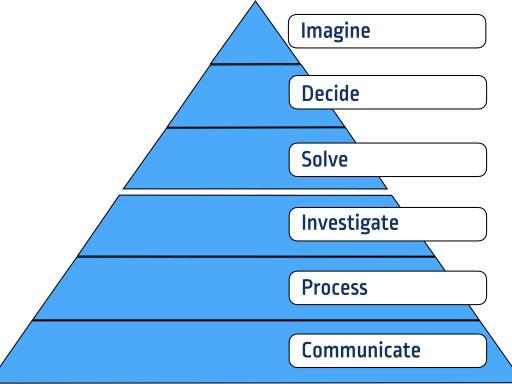
The AI-Supported Layers
- Communication: AI can lower the “meeting load” and help manage interactions.
- Process: AI is excellent at getting routine tasks done.
- Investigation: The technology is effective at finding issues and identifying problems quickly.
The Human-Centric Layers
- Problem Solving: Leaders often face new problems that haven’t appeared in an AI’s training data. Every leader will have a unique solve based on their context.
- Decision Making: Decisions are influenced by judgment, personal experience and hopes for the future. AI can suggest options, but it cannot decide what is right for a specific human or business context.
- Imagining: AI cannot dream of what should exist or what someone wishes were different.
Learn more at MHEDA’s 2026 Convention session, “AI and the Future of Everything,” on Tuesday, May 5, at 9:45 a.m. and again at 1:30 p.m. in Nashville. Presented by Dan Chuparkoff, AI and innovation expert.
Article Takeaways
1. Shift From Extremes to Practical ROI. Leaders must adopt a pragmatic approach to AI focused on measurable return on investment and business specific applications.
2. Quality Over Speed. AI’s greatest value lies not in doing work faster, but in improving the quality and outcomes of communication, workflows and customer engagement.
3. Humans Will Always Be the Decision-makers. As AI increasingly handles communication, processes and investigations, people must focus on the areas where competitive advantage truly lies.