
Cultivating leaders inside GP Academy's mission to reinvent workplace learning.
By Andrea Nemeth
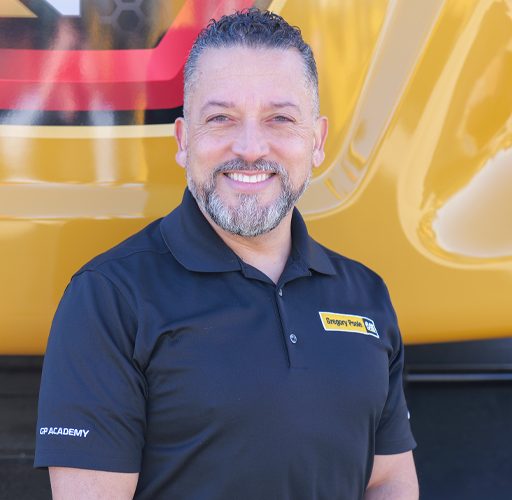
“WE’RE LOOKING AHEAD to the next 75 years.” says Nelson Santiago, Director of GP Academy at Gregory Poole Equipment Company.
Founded in April 1951, the company is approaching 75 years in business and has grown from dozens of employees at two locations to over 1,500 employees across 27 locations. Santiago, who has over 20 years of experience running talent development initiatives, is focused on building industry leaders for the dealer through its own in-house training organization, GP Academy.
“We started conceptually as a learning organization,” says Santiago. “In many organizations, each department does its own training – the training is very fragmented. With the GP Academy, everything that has to do with employee development is under the same umbrella. We’re taking a strategic approach to learning and development versus just a tactical way of doing business.”
Culture and Engagement
Gregory Poole Equipment Company is the Cat® dealer of eastern North Carolina and the Hyster and Yale dealer across parts of North Carolina, South Carolina, and Virginia. It has been family-owned and led for its entire history, putting a special focus on professional development and retention. The company boasts an average tenure of just over 8 years; nationally, the average tenure per employee is only 3.9 years.1 GP Academy offerings will continue to build that employee retention.
“We’ve always had a great culture at Gregory Poole, and good engagement,” says Santiago. “But when employees see a clear path to advancement and then, on top of that, they feel that they are supported in their growth, they are definitely more likely to stay.”
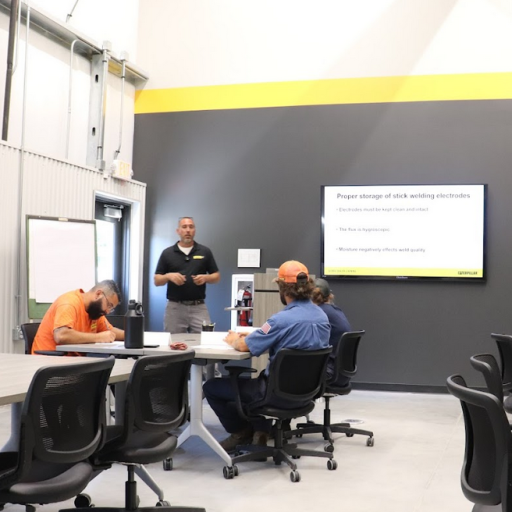
At the ground level, GP Academy provides paid technical training for new technicians interested in starting a career in the industry. All apprentices earn an income while taking part in hands-on and classroom training, and the curriculum prepares them to be full-time employees with the company. Degree-seeking apprentices graduate with a degree from a local community college and a job offer from GPEC with tuition reimbursed by their third year of full-time employment, while non-degree seeking apprentices earn an official certification from learning from accredited Cat® instructors.
From Training to Learning
GPEC is also a partner with DOD SkillBridge, a specialized apprenticeship available to armed forces service members in their last 180 days of military service. The goal of the program is to help transitioning military members prepare for civilian life through real-world technician experience.
These apprenticeships and other trainings created the opportunity for GPEC to develop GP Academy, but the goal of the organization is to evolve the company from a “training culture” to a “learning culture” at all levels of the business.
“In a training culture, you push the training to the people. In a learning culture, you build that desire to grow in them. It’s a growth mindset instead of a fixed mindset,” says Santiago. “We started with the technical training because that’s the core of the business. But as we were starting to build learning paths and learning plans for the technical side of the business, we realized that we also have to start building leadership skills and the soft skills, or what I prefer to call ’human skills,’ that are needed for day-to-day operations.”
The development offered by GP Academy will continue to build that employee retention. Santiago’s dream is for workers to think of the academy as second nature. But that change in paradigm takes time and GPEC is prepared for the wait.
“This is not instant gratification. When it comes to people, to the learning and development function, it is delayed gratification. We’re a very results-oriented organization. We’ve got to see the numbers. But when it comes to people, it’s not that simple. They need time to apply the skills, to practice them, to get comfortable and feel credible,” says Santiago.
Building a Growth Mindset
For organizations seeking to build their own growth mindset, Santiago offers some advice:
“Don’t start with a solution. Start with a definition of the skills. Ask yourself, what do we want our future leaders to be? What are they going to need in the future? People are not afraid to change. People are afraid of nonsensical change. When people don’t understand the why, they get scared and they get resistant and opposition builds. Start with the why.”
Article Takeaways
1. Unifying Development Under One Strategic Vision. By centralizing all employee development within GP Academy, Gregory Poole Equipment Company is shifting from fragmented training efforts to a long-term, strategic learning culture.
2. Retention Through Clear Growth Pathways. Paid apprenticeships, tuition support and defined career paths increase engagement and loyalty by showing employees exactly how they can grow within the organization.
3. Start With “Why” to Build Future Leaders. Organizations that define the skills their future leaders will need are far more successful in creating a true growth mindset.
References
1. www.bls.gov/news.release/pdf/tenure.pdf