
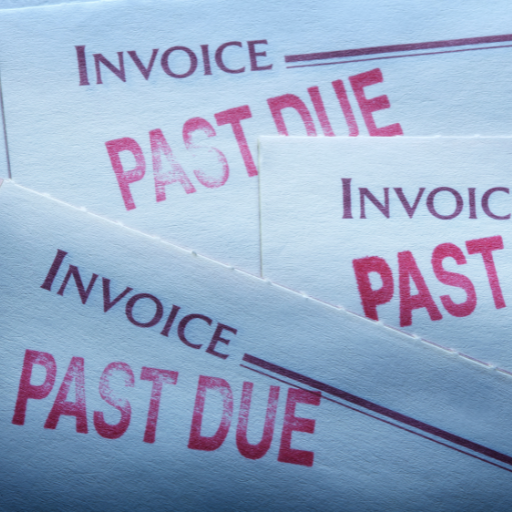
Late Payments Are More Than a Collections Problem
When invoices go unpaid, it’s easy to view the issue as a collections challenge.
But in today’s business environment, late payments often signal something much larger. They can reveal breakdowns in processes, communication, billing accuracy, contract management, and overall operational alignment.
For companies across the material handling industry, late payments are becoming increasingly difficult to ignore. Rising costs, economic uncertainty, supply chain pressures, and tighter margins mean that cash flow has never been more important. Every delayed payment creates additional strain on working capital, making it harder to invest in growth, manage expenses, and maintain financial flexibility.
The good news is that many payment delays can be prevented long before an invoice becomes overdue.
Why Late Payments Are Increasing
Several factors are contributing to longer payment cycles across industries.
Customers Are Holding Onto Cash Longer. Many organizations are facing financial pressure of their own. As a result, customers are extending payment terms, delaying approvals, or slowing purchasing decisions in an effort to preserve cash.
At the same time, suppliers often expect payment on tighter schedules, placing distributors and service providers in the middle of competing financial demands. This creates a challenging situation where cash leaves the business faster than it returns.
Operational Complexity Creates Errors. Today’s businesses rely on multiple systems to manage pricing, contracts, orders, inventory, shipping, and billing. When these systems don’t communicate effectively, errors can occur.
Something as simple as a pricing discrepancy, incorrect invoice amount, partial shipment, or outdated contract term can trigger questions from customers. Those questions often lead to disputes, which can delay payment by days or even weeks.
Cost Volatility Adds More Challenges. Tariffs, transportation costs, material pricing fluctuations, and supply chain disruptions continue to create uncertainty.
As costs shift, organizations may need to adjust pricing structures more frequently. Without clear communication and accurate documentation, customers may challenge invoices that don’t align with their expectations, creating additional payment delays.
The Hidden Cost of Late Payments
The impact of delayed payments extends well beyond cash flow.
- Finance teams spend valuable time resolving disputes instead of focusing on strategic initiatives. Administrative workloads increase as employees track down information, answer questions, and follow up on outstanding invoices.
- Supplier relationships can become strained when organizations are unable to meet their own payment obligations on time.
- Recurring billing issues can erode customer trust. When customers frequently encounter invoice discrepancies or confusion around charges, future transactions often become more complicated and time-consuming.
Over time, these inefficiencies create costs that many organizations never fully quantify.
How Companies Can Reduce Payment Delays
Organizations that consistently maintain healthy cash flow often take a proactive approach to revenue management.
- Create a Single Source of Truth. One of the biggest causes of billing disputes is inconsistent information. When contracts, pricing data, customer records, and billing information exist in separate systems, discrepancies become more likely. Creating greater alignment across systems helps ensure that everyone is working from the same information, reducing errors before invoices are generated.
- Make Contracts the Foundation. Clear, accurate contracts provide a strong foundation for the entire customer relationship. When invoices are directly tied to agreed-upon pricing, terms, and service levels, there is less room for confusion or disagreement. The closer billing remains to the original contract, the fewer surprises customers encounter.
- Improve Cross-Functional Communication. Late payments are rarely caused by one department alone. Sales, operations, customer service, finance, and project teams all influence the customer experience and billing process. Organizations that encourage stronger collaboration between these groups are often better positioned to identify issues early and resolve them before they impact payment timelines.
- Leverage Technology and Automation. Automation tools can help reduce manual errors, improve invoice accuracy, and provide greater visibility into the order-to-cash process. Artificial intelligence and advanced analytics are also helping organizations identify patterns that lead to disputes, allowing teams to address potential problems before invoices are sent. While technology won’t eliminate every payment delay, it can significantly improve efficiency and reduce preventable errors.
Key Takeaways
Late payments are often a symptom of broader operational challenges rather than simply a collections issue.
Companies that focus on improving data accuracy, strengthening contract management, increasing cross-functional collaboration, and streamlining billing processes can reduce disputes and accelerate cash flow.
In an environment where margins remain under pressure and uncertainty continues to influence business decisions, improving payment performance isn’t just about getting paid faster. It’s about creating a stronger, more resilient organization that is better equipped to navigate future challenges.
Visit NAW MDM for more information and to read the full article: Late Payments: Key Causes, Consequences and How to Close the Gap